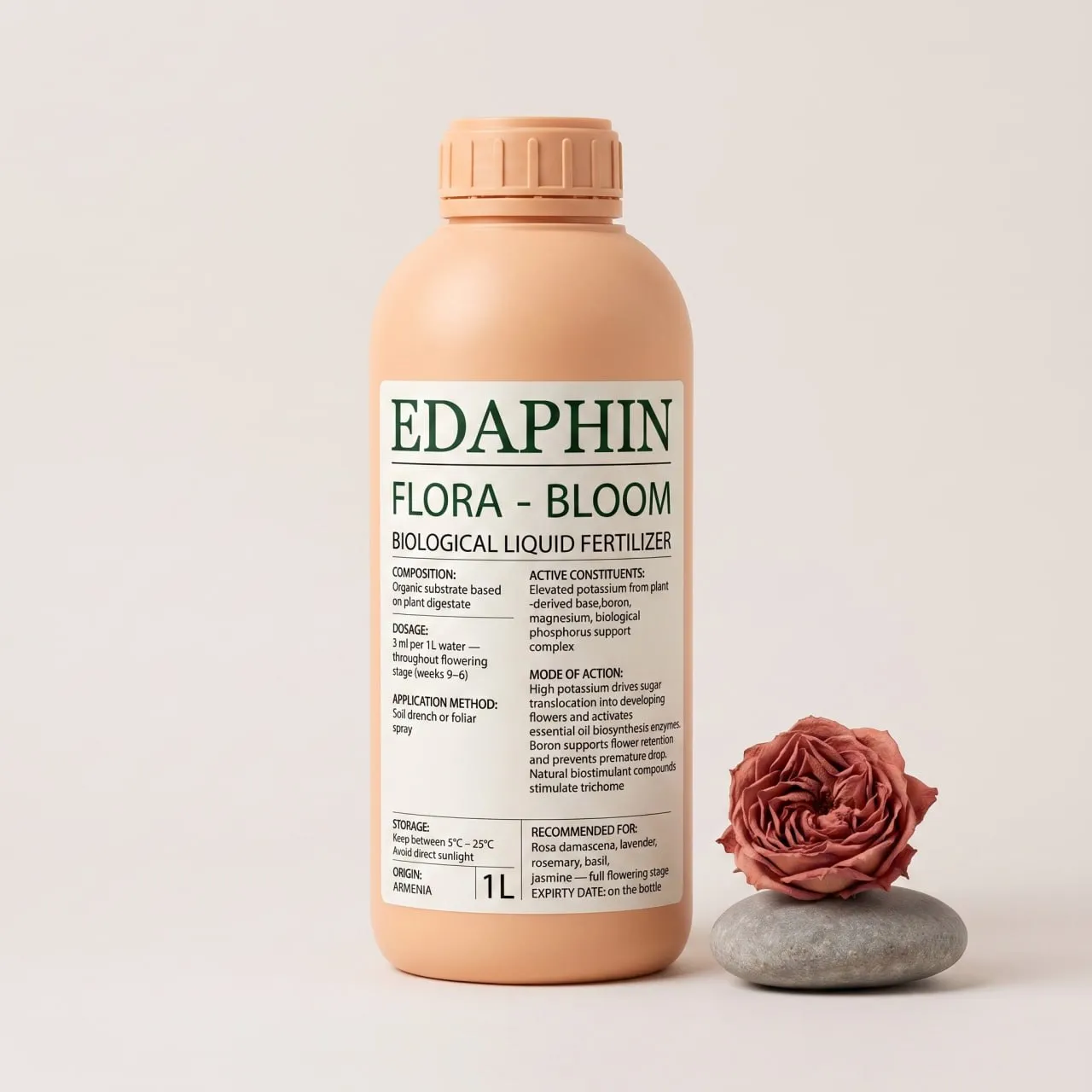
EDAPHIN FLORA — BLOOM
Full Flowering Stage — Flower Density and Essential Oil Activation
"A flower is not decoration. It is the plant's most concentrated biochemistry."
EDAPHIN FLORA BLOOM is the central formulation of the FLORA line — active during the longest and most productive stage of the aromatic plant cycle. Where GROW builds structure and PK BOOST initiates the transition, BLOOM sustains and maximises the flowering phase across its full duration: flower density, flower retention, essential oil accumulation, and secondary metabolite concentration.
Potassium is the defining element of BLOOM — and in aromatic plant production, its role extends beyond what conventional agronomy typically emphasises. Potassium activates over 60 plant enzymes, many of which are directly involved in the biosynthesis of terpenoids and essential oils. The higher the potassium availability during flowering, the more enzymatic capacity the plant has to channel precursor molecules into the terpene biosynthesis pathway. This is the mechanism behind the well-documented correlation between potassium nutrition and essential oil yield in Rosa damascena, lavender, and aromatic herb production.
Boron in BLOOM serves a specific structural role: it supports the formation of pollen tubes and the physical connection between flower organs that allows fruit and seed set in botanical terms — but more importantly for aromatic plant producers, it prevents premature flower drop, extending the productive window of each flowering site and maximising the total harvest from each plant.
Natural biostimulant compounds in BLOOM act on trichome development — the specialised glandular structures on leaf and flower surfaces where essential oils are synthesised and stored. Higher trichome density means higher essential oil content per gram of plant material harvested. This is a quality outcome, not merely a yield outcome.
Nitrogen in BLOOM is deliberately maintained at low levels. During full flowering, nitrogen availability signals the plant to invest energy in vegetative growth rather than reproductive and secondary metabolite production. BLOOM's nitrogen level is calibrated to the minimum required for cellular function, allowing maximum energy allocation to the flowering process.
Recommended For
- Rosa damascena — full flowering stage, rose oil production
- Lavender — Lavandula angustifolia and hybrids, flowering period
- Rosemary, thyme, oregano — flowering and essential oil harvest
- Jasmine — Jasminum sambac and J. grandiflorum
- Greenhouse ornamental production — weeks 6–9
- Any aromatic or medicinal plant during active flowering
Technical Specifications
| NPK Profile | ~1.5 — 2 — 9 |
| Potassium Level | High — essential oil enzyme activation |
| Boron | Present — flower retention and trichome support |
| Nitrogen | Low by design — prevents energy diversion from flowering |
| Application Method | Foliar spray or soil drench |
| Dosage | 3 ml per 1 L water — throughout weeks 6–9 |
| Key Outcome | Flower density + essential oil concentration simultaneously |